Europe / EUR >

How to choose the right shelf board and brackets
Mounting a shelf on the wall is a smart way to add both storage and style to your home. But to get a result that looks great and stays safe, it’s important to choose the right combination of shelf board and brackets. In this guide, we walk you through everything you need to consider — step by step.
1. What will the shelf be used for?
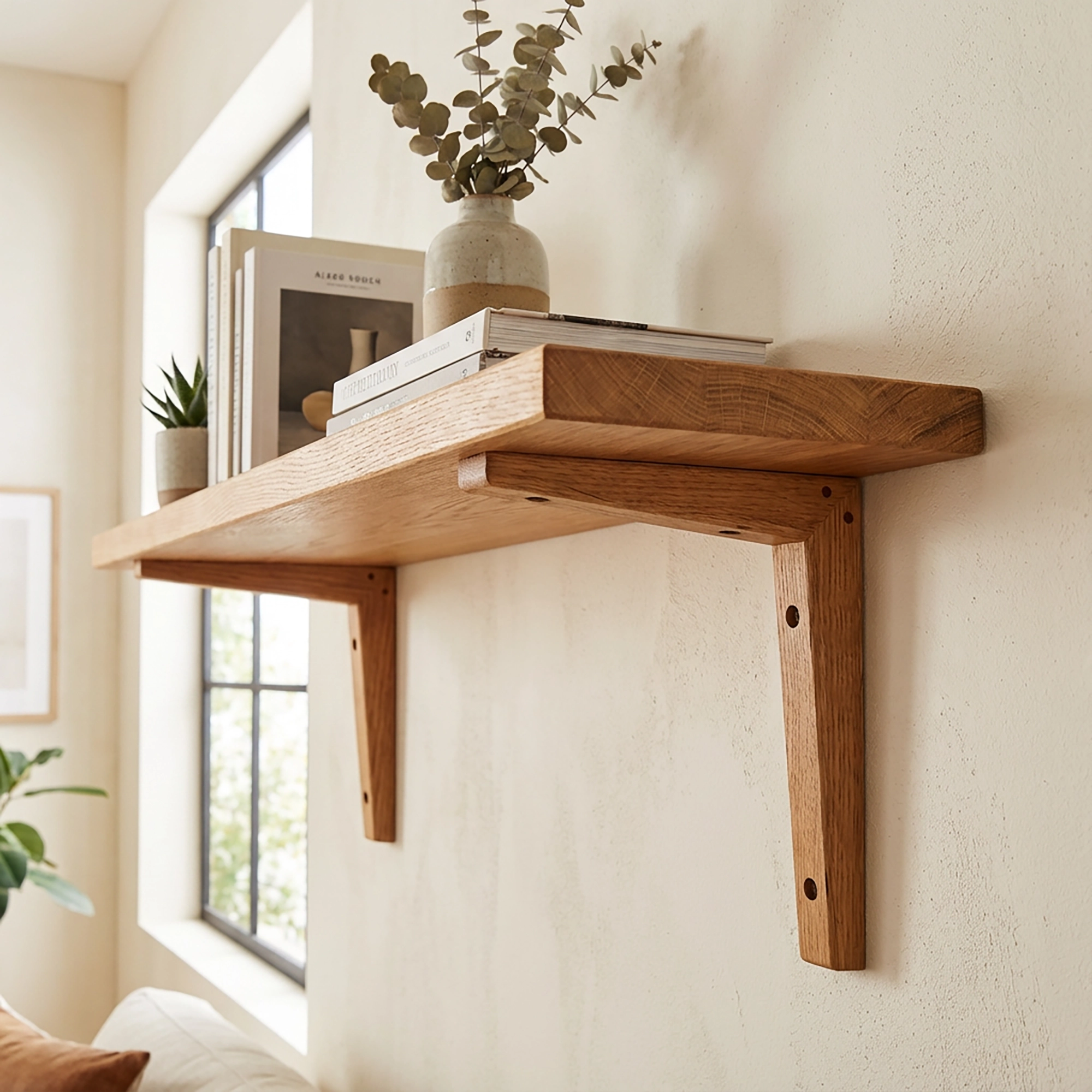
Before choosing brackets, wood type, or size, ask yourself the following questions:
⦁ What will the shelf hold? Light decorations, books, kitchen items, heavy tools, or wine bottles? The intended use determines the required depth, material, and load capacity.
⦁ How much weight will each shelf board carry? Books and ceramics add up quickly. A bookshelf can easily reach 15–30 kg per metre.
⦁ What style are you going for? Clean and minimalist with hidden fixings, or visible brackets that become part of the interior design?
⦁ What type of wall do you have? Concrete, timber stud, plasterboard, or lightweight concrete? This determines which screws and wall plugs you’ll need.
2. Choosing the right depth and length of the shelf board

The depth and length determine what fits on the shelf, how stable the solution is, and how many brackets are actually needed:
⦁ 15–25 cm: Perfect for books, decoration, plants, and small objects.
⦁ 25–30 cm: The most common choice for homes. A good balance between space and clearance.
⦁ 30+ cm: For kitchens, bathrooms, or heavier items such as boxes, crockery, or tools.
We offer lengths from 60–200 cm. Here’s our recommendation for number of brackets:
⦁ 60–80 cm: 2 brackets. Approximately 5–15 cm from each end.
⦁ 100–120 cm: 2–3 brackets. Two is often sufficient, but three gives better stability.
⦁ 140–160 cm: 3 brackets. One at each end and one in the middle.
⦁ 180–200 cm: 3–4 brackets.
3. Which material works best?
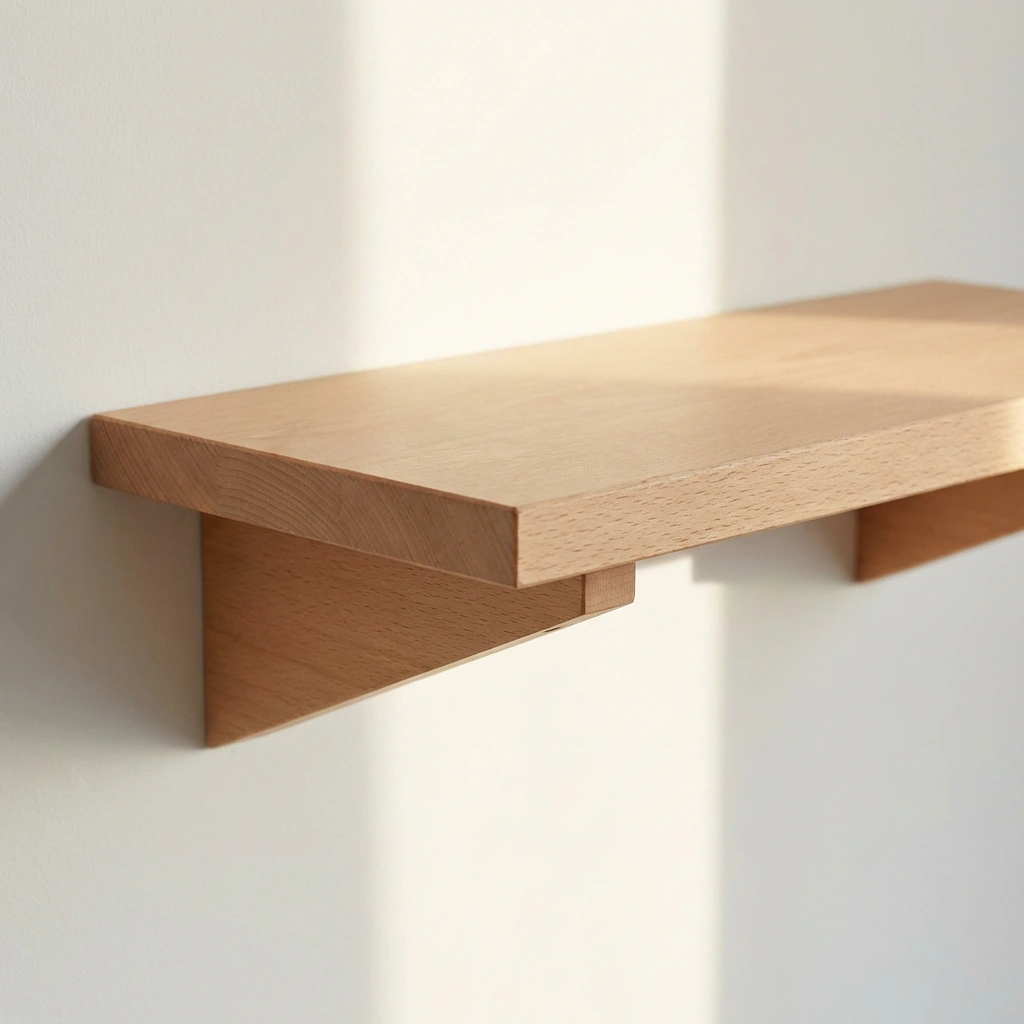
Your choice of material affects the look, feel, durability, and load capacity of the shelf over time. At AJKDesign, we offer brackets and shelf boards exclusively in solid wood — pine, beech, oak, and walnut. But which one should you choose?
Match the wood for a calm, cohesive look
If you want the shelf to blend in naturally, it’s usually best to choose the same wood as you already have in the room:
⦁ Oak floors, doors, or kitchen? Choose oak shelf boards and brackets. It gives a warm, consistent, and premium feel.
⦁ Beech furniture or parquet? Beech is an excellent choice — it has a fine, even grain and a slightly lighter, warm tone that suits many Scandinavian homes
⦁ Lighter, more rustic interior? Pine gives a natural, characterful, and relaxed feel that works well in both rural and modern Scandinavian interiors.
⦁ Dark and elegant room? Walnut is perfect. The deep, chocolate-brown tone creates a sense of luxury and depth, especially in living rooms or bedrooms.
Create contrast to make the shelf stand out
Want the shelf to be a beautiful detail that draws attention rather than blending in?
⦁ Bright room with white walls and light floors: Choose walnut or oak to create a striking contrast and add character to the room.
⦁ Dark room or lots of dark furniture: Light beech or pine can brighten the space and bring it to life.
⦁ Want something timeless and versatile? Oak and beech almost always work well and are easy to combine with most other materials and colours.
In the end, you can choose whichever wood you like — but to simplify the decision, just ask yourself: do you want the shelf to blend in or stand out?
4. Installation
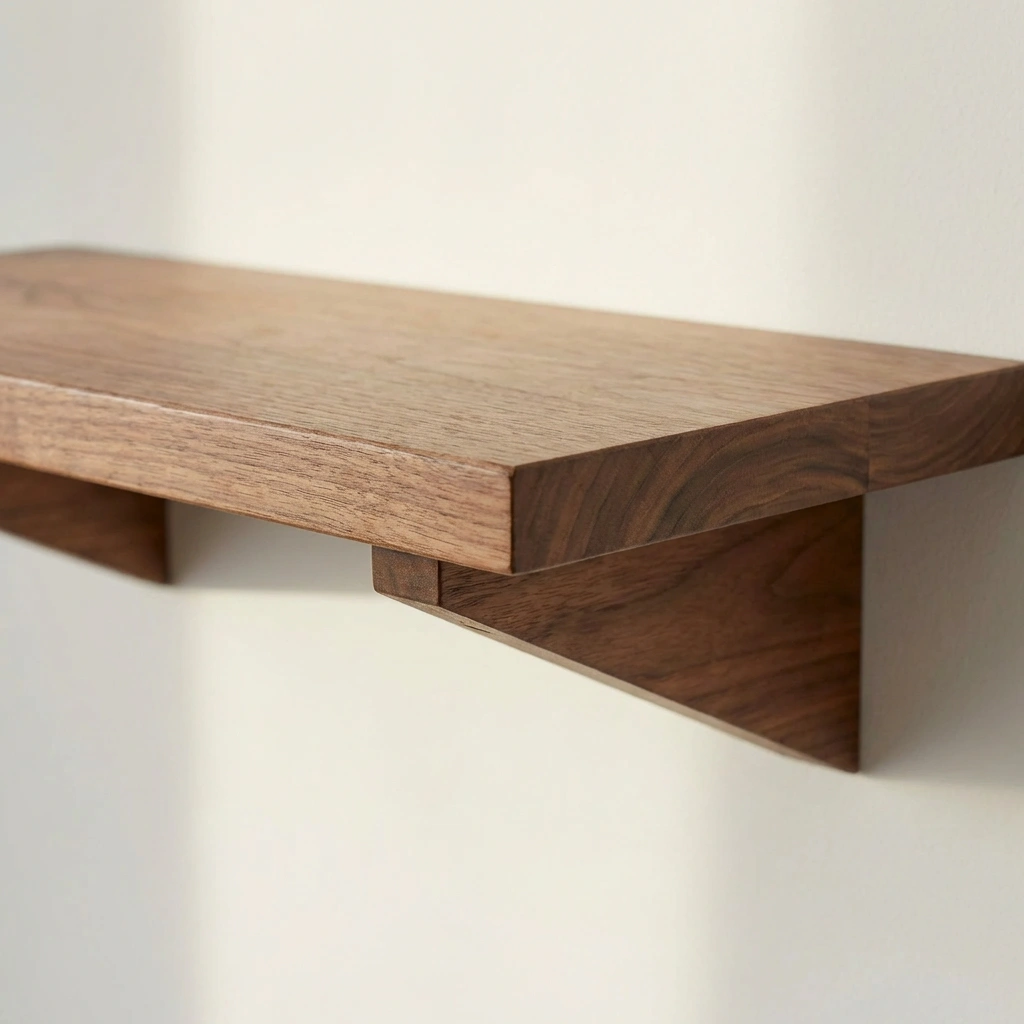
Mounting the shelf is fairly straightforward as long as you do everything in the right order.
Measure and mark: Decide where the shelf will go and mark the height and position of the brackets. If the shelf will carry a heavy load, try to locate the wall studs.
Position the brackets: Hold each bracket in place and mark the screw hole positions with a pencil.
Drill and plug: Drill for wall plugs suitable for your wall type, then screw the brackets firmly into place. Use a spirit level to ensure the brackets are at the same height and perfectly level.
Attach the shelf board: Place the shelf board on top and carefully drill to secure it to the brackets with screws. On some of our models there are no pre-drilled holes for fixing the board to the bracket — in that case you can screw from above through the board and into the bracket, use double-sided tape, or simply leave the board unfixed.
Check and load gradually: Make sure everything is level and secure, then begin loading the shelf gradually.
Maximum load depends primarily on how well the brackets are fixed to the wall. Under the right conditions, we have tested our brackets to support 30+ kg per bracket.
It depends on the wood. We ship our brackets and shelf boards in pine and beech unfinished, so those can be stained or painted straight away. Oak and walnut are shipped oiled, but you can contact us in advance if you’d prefer them unfinished so you can apply your own treatment.
Yes — since our shelf boards are solid wood, they can easily be cut down if you need a shorter length or want to get two pieces from one board. We recommend using a sharp blade with plenty of teeth to get the cleanest possible cut.
Our oak and walnut products are finished with natural boiled linseed oil. Pine and beech are delivered unfinished. To re-finish any of our shelves, start by cleaning the surface, then lightly sand with 180-grit sandpaper along the wood grain and vacuum away all dust. Apply a thin layer of boiled linseed oil using a cloth or sponge, wait 5–10 minutes, and wipe away any excess. Allow to dry indoors for at least 2 days.
If you can’t locate a load-bearing stud, you can use heavy-duty plasterboard anchors (also known as toggles, molly bolts, or high-load plasterboard fixings). Use anchors rated for at least 15–25 kg each, use more brackets than you normally would to spread the load, and avoid heavy items on the shelf. For extra security, you can fix a horizontal timber batten to the wall using several anchors and then mount the brackets into the batten. If the shelf needs to carry significant weight, we still recommend finding a stud or choosing a different wall location.